


Major insurers don't offer month-to-month car insurance. Established companies sell only six-month or annual policies, not 30-day insurance plans. Be cautious of websites advertising daily or weekly car insurance options because these are often scams that leave you driving without proper coverage. Your best option depends on your situation, how long you need coverage, whether you own a vehicle and your driving frequency.
Month-to-Month Car Insurance: Cheapest Temporary Coverage and Cost
Updated: October 1, 2026
Advertising & Editorial Disclosure
Key Takeaways
To get month-to-month car insurance, buy a standard six-month policy and cancel when finished. True "monthly" car insurance plans don't exist, but this provides temporary coverage.
Nationwide provides the best month-to-month car insurance due to its flexibility with no cancellation penalties and quick refund processing.
A $50 cancellation fee raises the effective cost of one-week coverage by 179%. Pay your premium in full and confirm cancellation terms before buying to avoid unexpected costs.
What Is Month-to-Month Car Insurance?
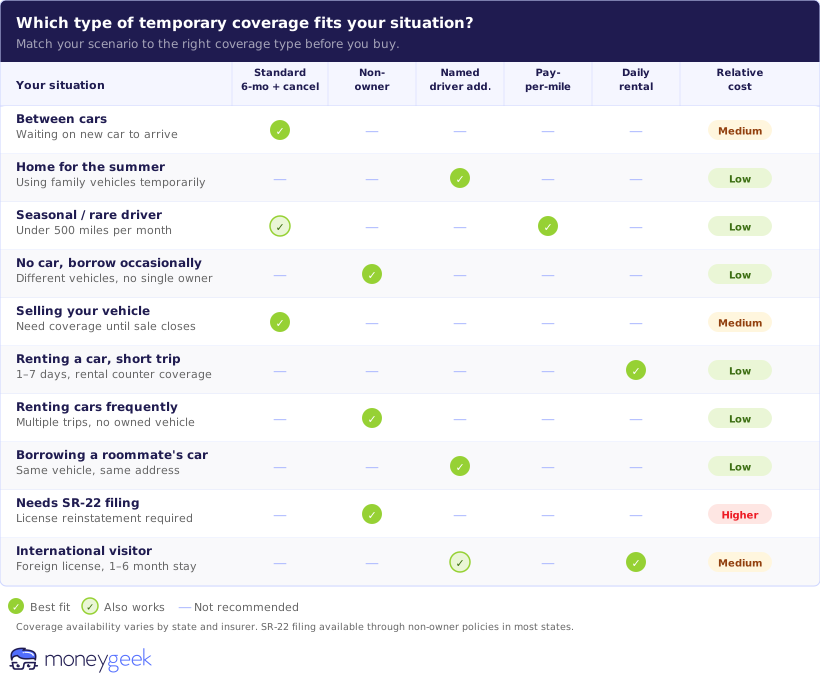
Temporary Car Insurance Coverage Types
Month-to-month car insurance provides flexible temporary coverage options for drivers who need 30-day policies. Compare the options below to find the right coverage for your needs.

BEST CAR INSURANCE COMPANIES THAT PROVIDED SAME DAY PROOF OF INSURANCE
GEICO, Progressive and State Farm provide immediate temporary car insurance with digital ID cards available online within minutes. You can start coverage and receive proof of insurance instantly, perfect for driving a newly purchased vehicle home or borrowing a car for a short trip. These insurers also offer 30-day car insurance policies with no waiting period, so you're covered the moment you need it.
Pros and Cons of One Month Auto Insurance
The main advantage is paying only for coverage when needed, with options including month-to-month policies, non-owner insurance and pay-per-mile plans. The primary disadvantage is higher daily rates compared with standard annual policies.
Buy a standard six-month policy and cancel early for full coverage with prorated refunds. You pay more upfront and wait seven to 30 days for your refund after cancellation.
Non-owner policies cover drivers without vehicles. This liability insurance maintains your continuous coverage history and satisfies SR-22 requirements at lower rates than standard policies. Borrowed vehicles get no damage coverage, only liability coverage.
Pay-per-mile insurance cuts premiums up to 40% for drivers traveling under 500 miles monthly. Pay a low base rate plus per-mile charges. Insurers require telematics devices to track your mileage.
Rental companies sell coverage for one to seven days without requiring policy cancellations. This gets expensive after one week compared to month-to-month policies.
Get added to someone else's existing policy for comprehensive coverage at lower cost than buying separate insurance. You're only covered for specific periods, and your protection depends on the policyholder keeping their policy active.
Month-to-Month Car Insurance Cost
Month-to-month car insurance costs approximately $113 based on prorating a standard six-month policy priced at $678. You'll receive around $565 as a refund when you cancel temporary car insurance after 30 days.
Temporary Car Insurance Quotes by State
Monthly car insurance quotes vary by state based on local regulations, traffic patterns and risk factors. State minimum coverage requirements heavily influence costs.
Premiums for one-week minimum coverage range from $5 to $24. Compare your state's average costs in the table to see if your quotes for short-term coverage are competitive. One-month coverage ranges from $21 to $97 by location, with Iowa the cheapest at $21 per month and New York the most expensive at $97 per month.
Data filtered by:
Minimum Coverage
| Alabama | $1 | $8 | $30 | $91 |
| Alaska | $1 | $9 | $36 | $107 |
| Arizona | $1 | $11 | $44 | $131 |
| Arkansas | $1 | $8 | $34 | $101 |
| California | $2 | $12 | $50 | $149 |
| Colorado | $1 | $9 | $37 | $111 |
| Connecticut | $2 | $15 | $59 | $176 |
| Delaware | $3 | $21 | $85 | $254 |
| District of Columbia | $2 | $12 | $46 | $138 |
| Florida | $2 | $17 | $67 | $201 |
| Georgia | $1 | $10 | $38 | $115 |
| Hawaii | $1 | $8 | $30 | $91 |
| Idaho | $1 | $6 | $25 | $76 |
| Illinois | $1 | $8 | $32 | $96 |
| Indiana | $1 | $7 | $30 | $89 |
| Iowa | $1 | $5 | $21 | $63 |
| Kansas | $1 | $9 | $35 | $105 |
| Kentucky | $1 | $10 | $41 | $122 |
| Louisiana | $2 | $14 | $56 | $169 |
| Maine | $1 | $7 | $29 | $88 |
| Maryland | $2 | $14 | $56 | $169 |
| Massachusetts | $1 | $10 | $38 | $114 |
| Michigan | $3 | $19 | $77 | $230 |
| Minnesota | $1 | $10 | $40 | $121 |
| Mississippi | $1 | $9 | $34 | $102 |
| Missouri | $2 | $12 | $50 | $149 |
| Montana | $1 | $7 | $26 | $79 |
| Nebraska | $1 | $8 | $31 | $94 |
| Nevada | $2 | $17 | $70 | $209 |
| New Hampshire | $1 | $10 | $38 | $115 |
| New Jersey | $2 | $17 | $69 | $207 |
| New Mexico | $1 | $9 | $34 | $103 |
| New York | $3 | $24 | $97 | $292 |
| North Carolina | $1 | $9 | $36 | $107 |
| North Dakota | $1 | $7 | $27 | $82 |
| Ohio | $1 | $8 | $30 | $90 |
| Oklahoma | $1 | $8 | $32 | $95 |
| Oregon | $2 | $13 | $54 | $161 |
| Pennsylvania | $1 | $8 | $32 | $96 |
| Rhode Island | $2 | $13 | $51 | $152 |
| South Carolina | $2 | $16 | $63 | $190 |
| South Dakota | $1 | $6 | $24 | $73 |
| Tennessee | $1 | $7 | $29 | $86 |
| Texas | $2 | $12 | $47 | $140 |
| Utah | $1 | $11 | $44 | $133 |
| Vermont | $1 | $6 | $23 | $69 |
| Virginia | $1 | $9 | $38 | $114 |
| Washington | $2 | $12 | $49 | $146 |
| West Virginia | $1 | $10 | $39 | $118 |
| Wisconsin | $1 | $8 | $32 | $95 |
| Wyoming | $1 | $5 | $22 | $66 |
New York ($97 per month) and Michigan ($77 per month) have some of the most expensive insurance policies. Both are no-fault states with high PIP fraud rates and litigation costs that most insurers operating there pass on to drivers. Iowa ($21 per month) and Vermont ($23 per month) are at the bottom because their low population density and low uninsured driver rates keep claims costs down.
30 Day Car Insurance Cost Calculator
Personalized estimates for temporary coverage give you a baseline to compare your month-to-month options without committing to applications. MoneyGeek's car insurance calculator helps determine your potential costs without sharing personal information.
Loading...
Is Month-to-Month Car Insurance Cheaper?
Month-to-month car insurance can cost less than standard policies for short-term coverage needs. You pay only for the months you use instead of a full six-month term.
College students home for summer and drivers between cars benefit most from this option. People selling a vehicle can also skip paying for coverage they don't need. Total cost depends on your payment method, so compare monthly rates against six-month premiums.
Paying in Full: Best Value for Month-to-Month Car Insurance
You can save money by paying upfront for one to three months instead of month to month. Confirm the cancellation and refund terms before you buy.
Benefits:
- You save 5% to 10% with payment-in-full discounts ($30 to $60 on six-month policies)
- You avoid monthly installment fees ($5 to $15 per payment)
- You get prorated refunds for unused coverage, excluding any cancellation fees
Drawbacks:
- Refund processing takes a week to a month
- You pay more upfront
Paying Monthly: Best for Budget-Conscious Drivers
Monthly payments lower your upfront cost. Over time, they add up to more than paying in full:
Benefits:
- Your initial payment is one-sixth of your total policy cost
- You get better cash flow management
- You can cancel without waiting for refunds
- Your cash stays available for other needs
Costs:
- It costs 10% to 15% more
- You have monthly installment fees: $5 to $15 per payment
- You lose 5% to 10% payment-in-full discounts
How Cancellation Fees Make Short-Term Policies More Expensive
Cancellation fees raise your effective daily rate. A one-month policy costs $113 when prorated from a $678 six-month premium. Add a $50 cancellation fee, and you pay $163. That's a 44% jump from $3.77 to $5.43 per day.
Adding a $50 cancellation fee turns a $28 one-week policy into a $78 one, a 179% cost increase. That's one benefit of buying a standard monthly policy. An ultra-short-term temporary car insurance is best for people who genuinely require a single week of coverage and nothing more.
One-week policies jump even more: $11.14 per day with a cancellation fee versus $4 per day without it.
Coverage Period | Best Cost | With $50 Fee | % Cost Increase |
|---|---|---|---|
1 week | $28 | $78 | 179% |
1 month | $113 | $163 | 44% |
Best Month-to-Month Car Insurance Companies
Nationwide ranks first for the best month-to-month car insurance company with a 93 out of 100 MoneyGeek score. MoneyGeek analyzed thousands of quotes and customer reviews. Nationwide has straightforward cancellation, prompt premium refunds and responsive customer service.

Best OverallNationwide
MoneyGeek Score:
93/ 100
Monthly Premium$105
Annual Premium$1,260
Overview
Nationwide is the best choice for month-to-month car insurance with straightforward cancellation. Full prorated refunds. No hidden fees. Nationwide activates coverage instantly through its digital platform with 24/7 customer support. The SmartRide program gives discounts within 30 days for drivers who need flexible coverage options.

Best for Personalized In-Person ServiceState Farm
MoneyGeek Score:
88/ 100
Monthly Premium$109
Annual Premium$1,308
Overview
State Farm is a good choice when you want personalized service from local agents. State Farm agents customize policies with no cancellation penalties for short-term coverage needs. The Drive Safe & Save program gives discounts within two weeks for quick savings.

Best for Premium Coverage OptionsAllstate
MoneyGeek Score:
71/ 100
Monthly Premium$133
Annual Premium$1,596
Overview
Allstate is the choice for month-to-month car insurance when you need comprehensive customization and immediate access to premium features. Allstate is the most expensive among the best insurers at $133 per month, but its coverage options include specialty protections like rental reimbursement and sound system coverage that other insurers save for long-term customers.
Allstate's accident forgiveness starts immediately, rather than requiring years of loyalty. The Drivewise program gives discounts within 30 days. Allstate's cancellation team processes prorated refunds within seven to 10 days.
Best for Digital-First ExperienceGEICO
MoneyGeek Score:
62/ 100
Monthly Premium$100
Annual Premium$1,204
Overview
GEICO is best if you prefer a digital-only service for your insurance. GEICO has the lowest average premium at $100 monthly with same-day coverage activation and instant digital ID cards. GEICO processes refunds within 48 hours, completing cancellations in two days versus the seven- to 14-day industry standard.

HOW TO CHOOSE THE BEST MONTH-TO-MONTH CAR INSURANCE COMPANY FOR YOU
Compare quotes from at least three month-to-month companies. Rates and cancellation terms vary more than you'd expect for month-to-month policies. Before you buy, check each company's refund processing time, cancellation fees and digital tools. The best short-term policies come with no cancellation fees, instant digital ID cards and a clear refund policy.
Don't let coverage lapse between policies. Even a short gap can raise your premiums 10% to 30% when you buy again.
How to Get and Cancel Month-to-Month Car Insurance
Getting month-to-month car insurance takes one to two days and saves you 30% to 48%. Understand how to get car insurance by the month.
- 1Determine if You Need Month-to-Month Car Insurance
Month-to-month car insurance works if you're selling your vehicle or waiting for a new car to arrive. It also covers temporary coverage needs right after a move. It's not ideal for renters, frequent car borrowers or drivers who need SR-22 filing.
- 2Choose Your Coverage
Start with 100/300/100 liability limits. Add comprehensive coverage for theft and weather damage, plus collision insurance for accident repairs. Pick $500 to $1,000 deductibles based on what you can afford.
Additional coverage options:
- You can get gap insurance (covers the difference between your car's value and loan amount)
- Uninsured motorist coverage
- Rental reimbursement (pays for rental cars during repairs) and roadside assistance (covers towing and emergency services)
- 3Gather Required Documents
- Driver's license and Social Security number
- Bank account information for payments and refunds
- Vehicle VIN, registration, year, make and model
- Coverage start and end dates
- Current policy information (if switching)
- 4Compare Multiple Quotes
Compare quotes from at least three insurers. Look at coverage limits and deductibles, along with discounts and payment options.
- 5Cancel Strategically
Cancel by phone, through your agent or via your insurer's online portal, whichever gets you a live confirmation fastest, to get your refund sooner. Have your policy number ready and specify the exact cancellation date you want. Before you hang up or close the portal, confirm the prorated refund amount and request written confirmation with the effective date.
Refunds take seven to 30 days to process. If yours doesn't arrive, contact your state insurance commissioner.
Month-to-Month Insurance on Car: Bottom Line
This insurance gives you flexible short-term coverage without long-term commitments. Daily costs are higher than standard six-month policies. But cancel anytime with prorated refunds. This is helpful for vehicle switching or seasonal driving.
Compare quotes from several insurers before buying month-to-month auto insurance. Rate differences can top 40% between providers. Find companies with instant digital ID cards, no cancellation fees and quick refund processing. Buy your new policy before canceling your current coverage to avoid gaps and premium increases.
Request quotes from GEICO, Progressive, State Farm and Nationwide to find your best month-to-month car insurance rates.
Monthly Auto Insurance: FAQ
We answer common questions about month-to-month car insurance to help you understand how it works and how to get coverage.
Month-to-month car insurance isn't available as standalone policies from insurers. For short-term coverage, buy a standard six-month or one-year policy and cancel it when you no longer need coverage.
Non-owner car insurance works for short-term coverage. It protects drivers who don't own a vehicle. Or get added as a driver to someone else's policy.
Nationwide is the best provider for month-to-month car insurance, with a 93/100 score based on coverage quality, customer service, financial stability, claims satisfaction and affordability. MoneyGeek's analysis shows Allstate, GEICO and State Farm as alternative top options for the average driver. These providers balance service quality and affordability. They don't charge cancellation fees.
Canceling a policy early doesn't directly impact future rates if you maintain continuous coverage without gaps. Even a brief lapse can raise premiums by 10% to 30% for several years.
Monthly payments are installment plans for longer-term policies. They add $5 to $15 fees per payment. Policy terms define the coverage period and contract. Paying in full earns you a 5% to 10% discount.
Minimum earned premium requirements force insurers to keep 10% to 30% of the six-month premium regardless of cancellation timing. A one-week effective period costs $67 to $203 instead of just $28. Some insurers also impose waiting periods before certain coverages kick in.
International visitors can choose between rental car insurance (best for trips under 30 days), specialized visitor policies from companies like Visitors Coverage (for one to six-month stays) or being added to a U.S. resident's policy. Most options require a valid international driver's license.
Yes. You can cancel a standard six-month car insurance policy after one month and receive a prorated refund for the remaining five months. Some insurers charge a cancellation fee of $25 to $50, which raises your effective cost. Nationwide, GEICO and Progressive don't charge cancellation fees, making them the best options if you plan to cancel early.
Loading...
How We Rated the Best Monthly Car Insurance Car Insurance Companies
Month-to-month coverage demands different criteria than standard policies. Insurers need to process refunds fast and skip cancellation penalties. Coverage also needs to activate immediately. Our methodology weighs these priorities, since you're only keeping a policy for weeks or months.
We collected 2,118,312 quotes from 67 insurers across 897 ZIP codes through Quadrant Information Services, then filtered for companies offering flexible cancellation terms. Most car insurance research focuses on long-term value. We focused on short-term flexibility, evaluating cancellation policies and refund timelines alongside traditional metrics like price and claims satisfaction.
Temporary Auto Insurance: Related Articles






About Mark Fitzpatrick

Mark Fitzpatrick is a licensed Property and Casualty (P&C) Insurance Producer and MoneyGeek's resident expert in insurance and economics. In nearly a decade covering the insurance market at LendingTree and MoneyGeek, he's analyzed hundreds of carriers and millions of rates across auto, home, renters, health and life insurance.
His work has appeared in The Washington Post, The New York Times and NPR. He draws on independent cost and consumer experience data, and no insurance company partnerships affect his recommendations.
Mark studied at Boston College and later earned a master's in economics and international relations from Johns Hopkins University. He worked in financial risk management at State Street before joining MoneyGeek. He's also a five-time “Jeopardy!” champion.