




Renters insurance rates vary by ZIP code and provider, so compare quotes from top insurers to see how your options stack up.
Average Cost of Renters Insurance in 2026
Updated: September 7, 2026
Advertising & Editorial Disclosure
Key Takeaways: Renters Insurance Rates
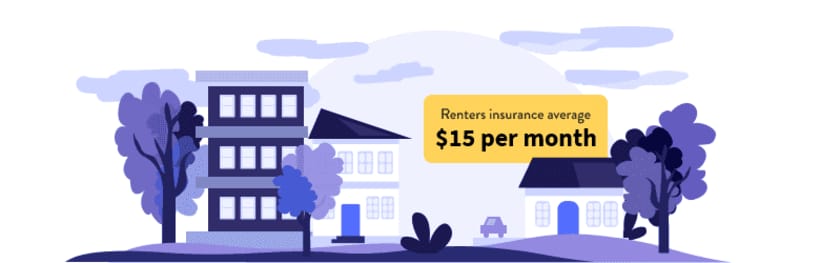
A standard policy with $20,000 in personal property and $100,000 in liability coverage averages $15 per month or $182 annually.
Renters with poor credit pay about three times more than those with excellent credit: $483 annually compared to $153.
Bundling your renters and auto insurance policies, choosing higher deductibles and installing security devices can help you save on your premiums.
$15 a month
NATIONAL AVERAGE
$182 a year
$10 a month
CHEAPEST INSURER
Amica - $116 a year
25%–40%
SAVINGS POTENTIAL
By shopping & bundling
Average Cost of Renters Insurance by Coverage Amount
Personal property coverage drives premiums more than most renters anticipate. Renters with $20,000 in coverage pay $182 per year; those with $250,000 pay $1,084 per year, nearly six times as much, per MoneyGeek's analysis. The relationship between coverage and cost is not linear: moving from $50,000 to $100,000 adds $207 per year, roughly $17 per month.
| $20K Personal Property / $100K Liability | $15 | $182 |
| $50K Personal Property / $100K Liability | $26 | $310 |
| $100K Personal Property / $100K Liability | $43 | $517 |
| $250K Personal Property / $300K Liability | $90 | $1,084 |

MONEYGEEK EXPERT TIP
We recommend a room-by-room inventory before choosing a coverage limit. Walk through your space and total the replacement cost of your electronics, furniture, clothing and valuables. Most renters find $20,000 to $50,000 covers their belongings comfortably, but go higher if you own expensive electronics, jewelry or collectibles. Use our renters insurance calculator to get a personalized estimate in minutes.
Average Renters Insurance Rates by Deductible
Our data shows that a $1,000 deductible hits the sweet spot for most renters, saving $17 per year versus a $500 deductible while keeping out-of-pocket exposure manageable. Only go higher if you have the cash reserves to cover it the same day a claim happens.
| $250 | $211 | $18 |
| $500 | $196 | $16 |
| $1,000 | $182 | $15 |
| $1,500 | $174 | $15 |
| $2,000 | $169 | $14 |
A $2,000 deductible saves $23 a year over the $1,000 baseline. That's a saving if you could pay $2,000 out of pocket tomorrow. Your ideal deductible depends on how much renters insurance you need overall.
Average Cost of Renters Insurance by Location
Louisiana renters pay the most per year, while renters in Wisconsin and Wyoming pay less. This difference is almost entirely because of weather risk and claim frequency.
| State | Average Annual Premium |
|---|---|
| Alaska | $156 |
| Alabama | $233 |
| Arkansas | $224 |
| Arizona | $216 |
| California | $192 |
| Colorado | $140 |
| Connecticut | $178 |
| District of Columbia | $156 |
| Delaware | $115 |
| Florida | $275 |
| Georgia | $208 |
| Hawaii | $148 |
| Iowa | $114 |
| Idaho | $146 |
| Illinois | $168 |
| Indiana | $167 |
| Kansas | $155 |
| Kentucky | $151 |
| Louisiana | $312 |
| Massachusetts | $162 |
| Maryland | $178 |
| Maine | $141 |
| Michigan | $201 |
| Minnesota | $173 |
| Missouri | $139 |
| Mississippi | $320 |
| Montana | $162 |
| North Carolina | $178 |
| North Dakota | $104 |
| Nebraska | $181 |
| New Hampshire | $129 |
| New Jersey | $147 |
| New Mexico | $117 |
| Nevada | $156 |
| New York | $159 |
| Ohio | $179 |
| Oklahoma | $211 |
| Oregon | $151 |
| Pennsylvania | $177 |
| Rhode Island | $127 |
| South Carolina | $218 |
| South Dakota | $114 |
| Tennessee | $164 |
| Texas | $162 |
| Utah | $147 |
| Virginia | $175 |
| Vermont | $128 |
| Washington | $141 |
| Wisconsin | $104 |
| West Virginia | $136 |
| Wyoming | $100 |
Values shown on the map are averages for good credit only.
California renters pay $192 a year, just above the $182 national average. Georgia renters pay $208 a year, also slightly above the national rate. See state-by-state renters insurance guides for a full breakdown by location.
Average Cost of Renters Insurance by Credit Score
Credit score has the single largest effect on your renters insurance rate. Moving from poor to good credit saves you $298 a year on average, from $480 down to $182 for the same coverage. Insurers see a high credit score as a sign of lower claim risk and price accordingly.
| Excellent | $13 | $153 |
| Good | $15 | $182 |
| Fair | $20 | $242 |
| Below Fair | $27 | $319 |
| Poor | $40 | $480 |
California, Hawaii, Massachusetts and Michigan prohibit insurers from using credit scores in pricing. In those states, your rate depends on location, coverage choices and claims history.

IMPROVE YOUR CREDIT SCORE FOR LOWER RENTERS INSURANCE RATES
Improve your credit score for lower rates. Moving from poor to good credit saves the average renter $301 per year on renters insurance. We recommend paying bills on time, reducing outstanding balances and checking your credit report for errors, all of which can move your score within 6 to 12 months.
How Much Is Renters Insurance Per Month?
Most renters want to know what they'll pay monthly before committing to a policy. Based on our rate analysis, the typical renter pays between $9 and $22 per month, depending on how much coverage they carry. Our coverage amount breakdown above shows the full monthly and annual figures across all tiers. Use our renters insurance calculator to estimate your specific cost based on location and coverage needs.
Average Cost of Renters Insurance by Claims History
Insurers treat prior claims as an indicator of future risk. A single claim in the past five years raises rates by 10% compared to a claim-free record. Two claims push rates up 25% above the claim-free baseline.
| Claim free for 5+ years | $15 | $182 |
| 1 claim in the past 5 years | $17 | $200 |
| 2 claims in the past 5 years | $19 | $228 |

MONEYGEEK EXPERT TIP
Skip filing a claim when the payout barely clears your deductible. If you need $600 in repairs and carry a $500 deductible, your insurer pays just $100, and your rate climbs for the next three to five years. Paying out of pocket for small losses usually keeps your claim-free discount and costs less over time.
Average Renters Insurance Cost by State
Location is one of the biggest drivers of your rate. We find a $226 annual spread between the cheapest and most expensive states, driven almost entirely by weather risk and claim frequency.
| AL | $21 | $251 |
| MI | $18 | $219 |
| ND | $9 | $113 |
| OK | $19 | $227 |
| SD | $10 | $123 |
| UT | $13 | $158 |
| WI | $9 | $112 |
| ID | $13 | $156 |
| LA | $28 | $338 |
| TX | $14 | $172 |
Louisiana tops our list of most expensive states for renters insurance at $338 a year, followed by Alabama ($251) and Oklahoma ($227). Michigan ($219) also ranks among the most expensive in this comparison. Wisconsin ($112) and North Dakota ($113) are the most affordable.
California renters pay $192 a year, just above the $182 national average. Higher property values and theft risk in cities push the state's rate up. Georgia renters pay $208 a year, also slightly above the national average. Even in the priciest states, renters insurance costs far less than comparable homeowners coverage.
Renters Insurance Cost by Company in 2026
We compared rates from all major insurers using a base profile of $20,000 in personal property coverage, $100,000 in liability, and a $1,000 deductible. The cheapest company charges less than half of what the most expensive charges for identical protection, which is why we consistently recommend comparing at least three quotes before buying.
| AAA | $11 | $134 |
| Acuity | $12 | $141 |
| Agraria Insurance | $12 | $147 |
| ALFA Insurance | $19 | $230 |
| Allstate | $15 | $178 |
| American Family | $17 | $199 |
| American National | $13 | $155 |
| Amica | $10 | $116 |
| Arbella | $13 | $152 |
| ASI Insurance | $17 | $204 |
| Assurant Insurance | $16 | $188 |
| Auto-Owners Insurance | $12 | $145 |
| Capital Insurance | $10 | $126 |
| Chubb | $23 | $277 |
| Cinncinnati Insurance | $22 | $260 |
| Citizens Property Insurance | $9 | $107 |
| Co-operative Insurance | $8 | $100 |
| COUNTRY Financial | $19 | $232 |
| DB Insurance | $13 | $150 |
| Erie Insurance | $15 | $183 |
| Farm Bureau | $21 | $250 |
| Farmers | $21 | $250 |
| Farmers Mutual Ins Co of NE | $16 | $194 |
| Florida Peninsula Insurance | $20 | $239 |
| Grange Insurance | $9 | $107 |
| Hawaiian Insurance Group | $20 | $243 |
| HCI Insurance | $33 | $392 |
| Homesite Insurance | $18 | $220 |
| IMT Insurance | $10 | $121 |
| Lemonade | $11 | $135 |
| Mercury Insurance | $13 | $159 |
| MMG Insurance | $12 | $143 |
| Mutual of Enumclaw Insurance | $18 | $215 |
| Nationwide | $16 | $186 |
| NJM Insurance | $7 | $80 |
| North Star Insurance | $10 | $125 |
| NYCM Insurance | $10 | $122 |
| Ocean Harbor Insurance | $13 | $153 |
| PEMCO Insurance | $9 | $105 |
| Plymouth Rock Insurance | $16 | $193 |
| Progressive | $15 | $176 |
| RLI Insurance | $13 | $157 |
| Safety Insurance | $11 | $137 |
| Shelter Insurance | $17 | $199 |
| State Farm | $12 | $145 |
| The Andover | $12 | $146 |
| The Hanover | $27 | $327 |
| The Hartford | $25 | $297 |
| Tower Hill Insurance | $13 | $155 |
| Travelers | $24 | $286 |
| Universal Insurance | $19 | $231 |
| USAA | $14 | $171 |
| Vermont Mutual Insurance | $12 | $140 |
| West Bend Mutual Insurance | $7 | $84 |
| Western National Insurance | $13 | $150 |
| Westfield Insurance | $15 | $183 |
Amica scores highest for overall value in MoneyGeek's analysis, based on claims satisfaction and coverage depth ratings. Lemonade offers the lowest rates in 15 states and Washington, D.C. Renters in those markets should compare Lemonade rates directly. USAA is restricted to military members and their families.
What Affects Your Renters Insurance Cost?
Our rate data points to six factors that drive what you'll pay.
Credit Score
Credit score has the biggest single effect on your rate in most states. Renters with poor credit pay $483 a year on average, more than three times the $153 average for renters with excellent credit. California, Hawaii, Massachusetts and Michigan block insurers from using credit scores at all.
Location (State and ZIP Code)
Your state sets a baseline rate, but your ZIP code narrows it further. Areas with more property crime, more frequent storms or dense urban populations carry higher premiums. We've seen rate differences of $50 or more between ZIP codes in the same state. Moving to a gated or secured community can earn you a discount with many insurers.
Coverage Amount
Higher personal property coverage raises your premium, but not at the same rate throughout. Moving from $20,000 to $50,000 in coverage doesn't triple your cost. Calculate the real replacement value of your belongings before you settle on a limit, so you don't over- or underinsure. Our guide to how much renters insurance you need walks through the math.
Deductible
A higher deductible lowers your premium but raises what you pay out of pocket when you file a claim. A $1,000 deductible balances monthly savings against manageable exposure for most renters.
$500 | $199/yr | Higher premium, lower out-of-pocket |
$1,000 | $182/yr | National average baseline |
$2,000 | $159/yr | Lower premium, higher out-of-pocket |
A $2,000 deductible saves about $23 a year over $1,000. Unless you keep a solid emergency fund, that extra saving likely isn't worth the added risk. Only raise your deductible to an amount you could pay tomorrow if something happened.
Claims History
Filing renters insurance claims, especially multiple claims within a short period, raises rates at renewal. Renters who remain claim-free for three or more years often qualify for loyalty discounts of 5% to 10%, per MoneyGeek's analysis. For minor losses at or below the deductible, paying out of pocket instead of filing a claim avoids a rate increase.
Coverage Add-Ons
Standard renters insurance policies cap payouts for valuables such as jewelry, fine art and electronics. Items above those caps require a scheduled personal property rider, which raises the premium. Owning a pet can affect the rate as well: some insurers charge extra for certain dog breeds or exclude pet-related liability altogether. The standard policy terms should be reviewed to confirm whether high-value items are covered in full.
How to Lower Your Renters Insurance Cost
We consistently find four strategies deliver the highest impact on your premium:
Bottom Line: Is Renters Insurance Worth It?
Yes, for nearly every renter. At $15 a month, you're covering losses that could cost tens of thousands of dollars. A single theft or fire claim often costs more than years of premiums combined. Most renters own more than $20,000 in belongings once they add up laptops, furniture, clothing and everyday electronics.
Liability coverage matters just as much. If a guest gets hurt in your unit or you damage a neighbor's property, your $100,000 limit covers the legal fees and damages that could otherwise wreck your finances.
Get at least three quotes and bundle with your auto insurance if you can. Make sure your coverage limit matches the real replacement cost of your belongings, not a round number you picked at sign-up.
Renters Insurance Rates: FAQ
Insurers weigh several factors when pricing renters insurance, including coverage amount, location and claims history.
Yes. Louisiana and Mississippi are the most expensive states, driven by hurricane and severe weather risk. Wisconsin and Wyoming are the most affordable. California averages $192 a year, just above the national average of $182. Even in the most expensive states, renters' insurance costs far less than other coverage types.
Three strategies deliver the largest savings on renters insurance. First, bundle renters and auto insurance with the same insurer: most companies offer 10% to 25% off both policies. Second, choose a higher deductible; moving from $500 to $1,000 saves roughly $17 per year on average. Third, install smoke detectors or a security system, which typically earns a 5% to 15% discount. Comparing quotes annually also matters: rates for identical coverage can vary by $150 or more between insurers.
Yes, for most renters. At $15 a month, a single theft or fire claim can cost more than years of premiums. A laptop, TV and wardrobe alone can add up to more than $5,000. Liability coverage matters equally: a guest injury lawsuit could cost tens of thousands of dollars without it. We recommend renters insurance for nearly every renter, no matter how modest their belongings look.
Close, but not quite. The cheapest states, including Wyoming, Wisconsin and South Dakota, average $7 to $10 a month. To get near $5, you'd need minimal coverage ($10,000 in personal property), a high deductible ($2,000) and excellent credit in a low-cost state. That leaves you with limited coverage, and we don't recommend it.
Six factors drive your rate: your location (state and ZIP code), your personal property coverage amount, your deductible, your credit score in most states, your claims history and any coverage add-ons like scheduled property riders or pet liability. Credit score has the biggest effect: renters with poor credit pay $483 a year on average, versus $153 for renters with excellent credit, a $330 difference.
Average Renters Insurance Cost: Our Review Methodology
The rates in this article come from MoneyGeek's proprietary analysis of renters insurance quotes collected from licensed insurers across all 50 states and Washington, D.C. Our base profile uses a policy with $20,000 in personal property coverage, $100,000 in liability protection, and a $1,000 deductible for a renter with good credit and no prior claims.
We analyze quotes at multiple coverage tiers, deductible levels, and credit score categories to produce the segmented averages shown throughout. Rates shown represent averages, and your actual premium will vary based on your location, insurer, coverage choices and personal profile.



About Mark Fitzpatrick

Mark Fitzpatrick is a licensed Property and Casualty (P&C) Insurance Producer in Connecticut and MoneyGeek's resident expert in insurance and economics. In nearly a decade covering the insurance market at LendingTree and MoneyGeek, he's analyzed hundreds of carriers and millions of rates across auto, home, renters, health and life insurance.
His work has appeared in The Washington Post, The New York Times and NPR. He draws on independent cost and consumer experience data, and no insurance company partnerships affect his recommendations.
Mark studied at Boston College and later earned a master's in economics and international relations from Johns Hopkins University. He worked in financial risk management at State Street before joining MoneyGeek. He's also a five-time “Jeopardy!” champion.